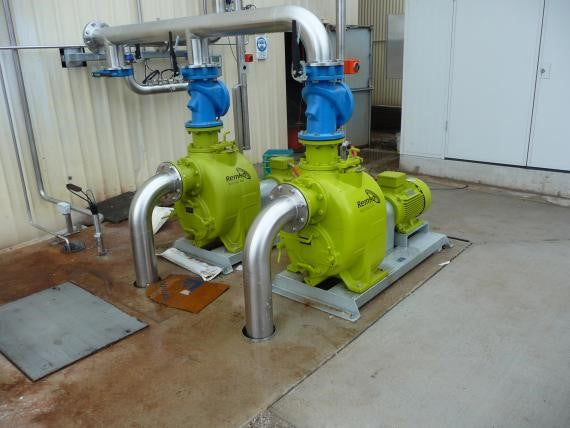
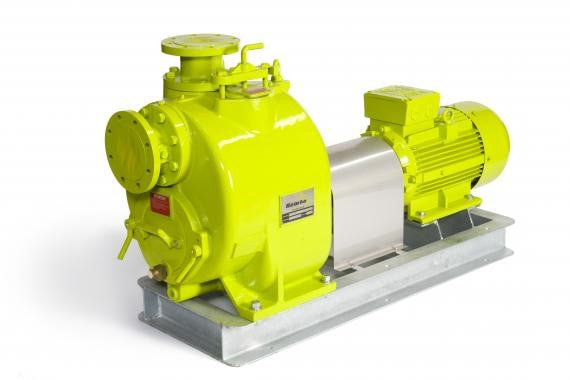
Self-priming pumps are reliable workhorses, but when issues arise, proper diagnosis is essential. Understanding pressure readings and common problems helps maintain optimal performance.
Gauge Reading Interpretation
Pressure readings provide diagnostic clues. Elevated discharge pressure signals a blockage in the discharge line, while high suction readings indicate obstruction in the suction line. Low or absent suction gauge readings suggest leakage in the suction system. Fluctuating suction readings point to vortexing or some other form of air entrainment.
Common Troubleshooting Issues
Noisy Operation
The source determines the fix strategy. Drain the pump casing and run it empty—if noise persists, the problem is mechanical (loose hardware, bearing wear). If noise disappears, the issue is hydraulic (cavitation, vortexing, or air entrainment).
Cavitation represents the formation of partial vacuums in a flowing liquid as a result of the separation of its parts. Vacuum bubbles collapse with force exceeding 100,000 PSI, causing metal surface damage. This sounds like the pump has rocks or marbles going through it.
Pump Won’t Prime or Primes Slowly
Check for suction leaks by wrapping cling wrap around joints. Repair any leaking connection. If no leak exists, the suction line may be oversized or too lengthy—speed adjustment, diameter reduction, or constructing a “P Trap” may help.
Pump Stops or Fails to Deliver Rated Flow
High suction readings indicate blocked suction lines. High discharge readings suggest discharge blockages. Low readings on both gauges point to pump clearance issues or impeller obstruction.
Frequent Clogging
Verify pump operation on its performance curve. Operating too far left indicates insufficient velocity for solids handling—increase speed. If operating at BEP (best efficiency point), the pump may be unsuitable for application. Consider upgrading the impeller system or installing a strainer.
Key Takeaways
- Monitor pressure gauges to diagnose suction and discharge issues
- Identify noise source to determine if issue is mechanical or hydraulic
- Check for suction leaks if pump won’t prime properly
- Verify pump operates on its performance curve for optimal solids handling